Check .lt domain
A resident of Lazdijai, who has restored an old farmstead, presents cultural activities online
Romas Poteliūnas, a public activist who restored an old farmstead in Kurdimakščiai Village in Lazdijai District, fosters cultural activities and presents them on the website kultūroskalnelis.lt, which won last year’s competition for the most beautiful Lithuanian internet name. According to the owner of the farmstead, even the smallest organisations need to be present online in today’s world, and this can be achieved very easily and without large investments.
The cultural space was born accidentally
Romas was inspired to create a cultural space surrounded by a beautiful landscape by chance, when he was offered the opportunity to buy a farmstead nearby, even though at the time, he had no idea what he would do with the acquired property.
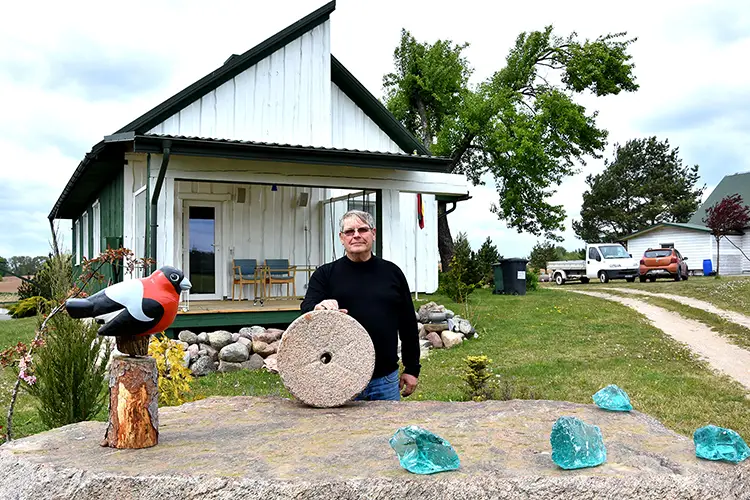
Romas Poteliūnas, entrepreneur and public activist
“I do not know how to do farm work, and I did not want to just do commercial rural tourism. In my youth, I wrote poetry, which was published in the Alytus regional newspaper. Perhaps that is why I had the idea to work in the cultural field and bring people together for celebrations and cultural events.
Currently, people are immersed in their work and have no time for anything because they rush through their daily routine. This farmstead is my attempt to introduce rural people to culture, encourage them to be civic-minded and more focused on community. Therefore, I organise various events here, from poetry readings and book presentations to celebrations and tastings,” – says R. Poteliūnas.
A website to present cultural activities
He needed a website to present the farmstead and the events organised there. According to R. Poteliūnas, it was quite an easy task to think of a name, find an available domain name and create a website.
“When I started repair work on the farmstead, I realised that my attempts to tell everyone about my idea and the information provided in the local newspaper were not enough, so I needed to use the internet. I thought that a representative website with many photographs and video material, where people could instantly see all the activities, the emotions of the events and the unique beauty of nature would be the most appropriate solution for presenting the farmstead.
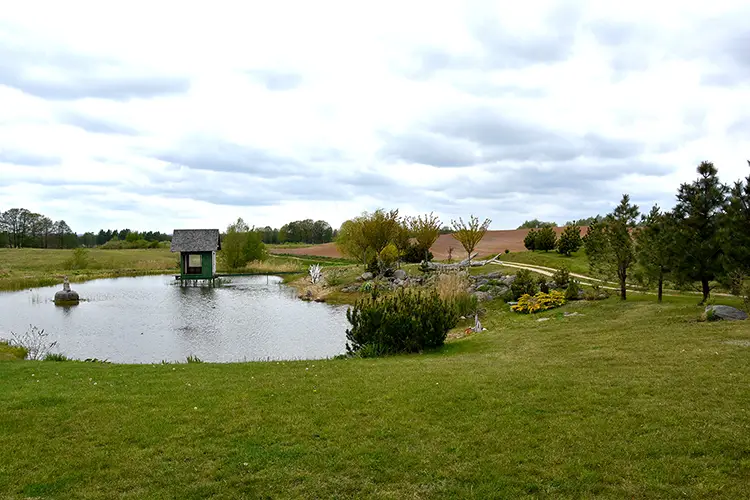
This farmstead is located on a hill, and I am trying to “create” culture here, without setting the bar too high, of course. So, culture on the hill was the basis for the name “Kultūros kalnelis” (Hill of Culture), and the domain name kultūroskalnelis.lt was available and perfectly suitable for the representation of this idea.
I entrusted the technical work of creating the website to a family member. He is a young guy who spends nights at the computer, so all I had to do was tell him the idea and send him the photographs and texts. He quickly did all the work using Hostinger tools,” – R. Poteliūnas recalls the process of creating the website.
Domain for preserving the uniqueness of the Lithuanian language
When asked why he registered an IDN (Internationalised Domain Name) domain for his website with the unique Lithuanian letter ū instead of changing it to the standard Latin letter u, R. Poteliūnas replied that he did not want to distort the unique Lithuanian language with incorrect spelling. According to the entrepreneur and public activist, the prevailing English names and trademarks in our country, even in the cases of local businesses, reflect the negative attitude of Lithuanians towards their own country.
“Back in the dark days of the Soviet era, I had a dream of opening a restaurant, which was unimaginable at the time. After Lithuania regained its independence, I did not give up on this dream. When I had an opportunity to purchase a piece of land, I opened the restaurant Tėvynė (Motherland) in Kaunas, near the Vilnius-Klaipėda highway. Naming my restaurant Tėvynė caused negative reactions. Not everyone thought it was a good idea, but people got used to this name in Kaunas, it became well known and has remained to this day.
The first major wave of emigration occurred between 1990 and 2000, when many Lithuanians left to work and live abroad. At that time, there were no jobs in Lithuania, salaries and quality of life were low, which led to a negative perception of our country in economic and socio-cultural terms.
But now there is a higher level of living, Lithuania has established itself among European countries, so people should have a different approach to culture, history and language. Even young people who travel frequently are starting to understand the significance of culture and language. If we do not preserve our language and its uniqueness, if we succumb to the English-speaking trends, we will lose our uniqueness. Not wanting to distort our language and use a diacriticless name, I registered the domain kultūroskalnelis.lt, and I am very happy that there are quite a few businesses that are proud of their Lithuanian names,” – argues the respondent.
Obstacles to the comprehensive use of the Lithuanian language online
Tomas Mackus, Head of the Internet Service Centre DOMREG at Kaunas University of Technology (KTU), which administers Lithuania’s national .lt domain, believes that the use of diacriticless domain names was shaped by necessity. Until 2004, it was not technically possible to register .lt domain names containing specific Lithuanian letters, and even now, such domains are not always displayed correctly.
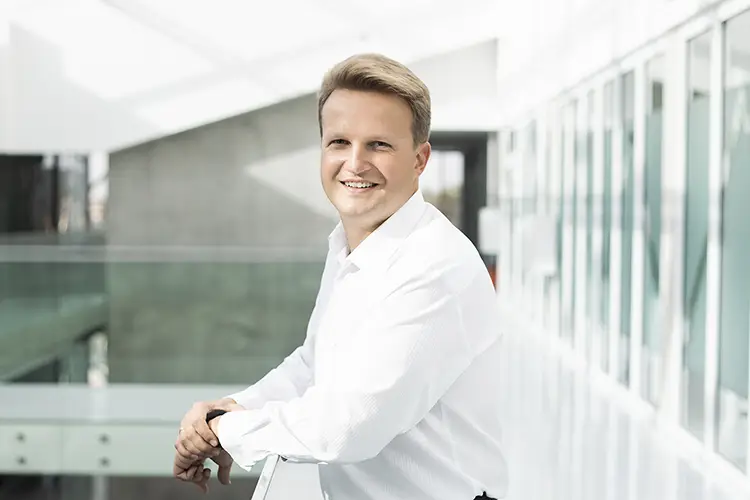
Tomas Mackus, Head of KTU Internet Service Centre
“Currently, the biggest obstacle to the comprehensive use of IDN domains is the underdeveloped infrastructure, because not all social networks and software properly display unique Lithuanian letters in domain names.
The lack of trust in IDN domains was probably caused by the possibility of using letters from different languages in the same domain name, as it allowed malicious individuals to register misleadingly similar domain names and thus deceive the internet users. When the problem was identified, this practice was abandoned. For security reasons, only Lithuanian letters can be used in .lt domain names,” – explains T. Mackus, Head of the KTU Internet Service Centre DOMREG.
According to him, however, diacriticless domains are necessary both for the convenience of foreign language speakers and for security reasons.
“There are quite a few cases when two competing websites can be accessed using the same domain name, but one of them has a diacriticless domain name, while the other has a correctly spelled domain name with Lithuanian letters. If the IDN domain is left vacant and only the diacriticless one is used, competitors can take advantage of this by registering the domain for themselves. And vice versa, if only the IDN domain is used and the diacriticless one is left unregistered, there is a risk that it can be registered by someone else, possibly competitors or even fraudsters. For these reasons, we recommend registering both versions of the domain name (the diacriticless and the correctly spelled one) and redirecting to one of them.
Of course, in public communication, such as logos, trademarks, radio advertising, or the media, people should use the correct spelling and not distort the Lithuanian language,” – recommends T. Mackus.
Published 2026-03-12